


Latest News
“Buhari’s Soldier’s Paradise: Idealism Or Isolation?”

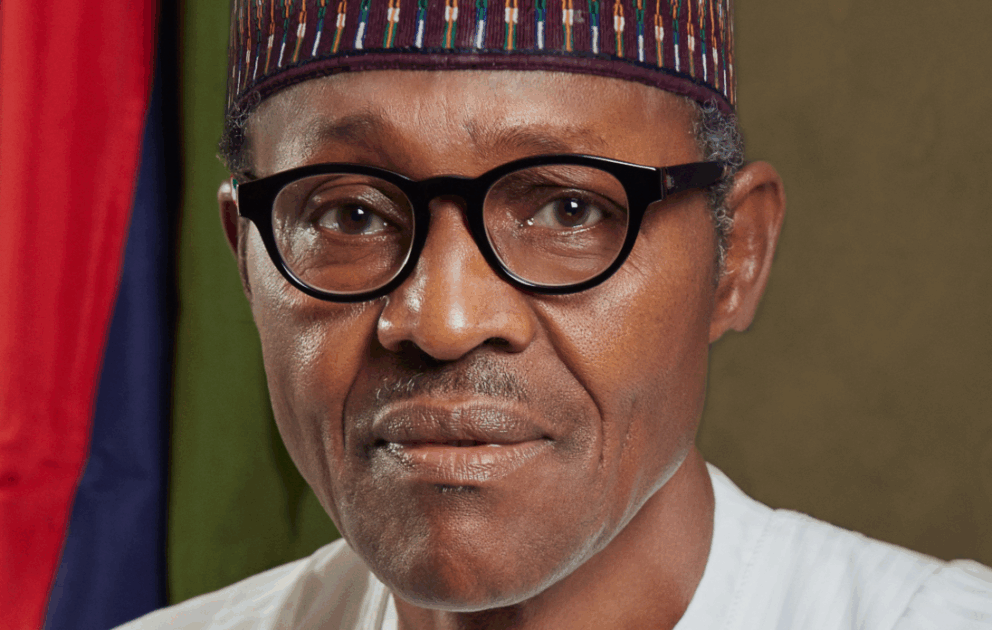
This article draws on the insights of historian Samuel Fury Childs Daly to examine Nigeria’s military legacy and its enduring imprint on the country’s identity and governance.
At the center is the late Muhammadu Buhari (1942–2025), a former military dictator who later became a democratically elected president—embodying what Daly calls the “soldier-statesman” in postcolonial Africa.
His rule—marked by campaigns like the War Against Indiscipline and reactions to protests such as #EndSARS—reflects the persistent tension between authoritarianism and democracy in Nigeria.
According to iReporter Online, Buhari’s legacy has sparked renewed debate following his death on July 13, 2025. Daly, author of Soldier’s Paradise: Militarism in Africa After Empire, explains that Buhari exemplified Nigeria’s long-standing infatuation with martial order. Describing him as the “paradigmatic soldier-king,” Daly argues that Buhari’s belief in “discipline as a political tool” shaped not only his own presidency but also the nation’s broader political ethos.
Even after transitioning to civilian leadership in 2015, Buhari retained a deep commitment to top-down control, often prioritizing order over dissent.
According to iReporter Online, Buhari’s vision of a militarized Nigeria was not confined within its borders. His alleged involvement in the infamous Dikko Affair exemplified how his regime relied on covert international networks to suppress dissent.
The 1984 kidnapping plot—aimed at abducting former Minister Umaru Dikko from London—demonstrated how Nigeria, despite having no formal diplomatic ties with Israel, engaged with Israeli intelligence to execute an audacious international operation.
The botched plan, foiled by British authorities, revealed the dark underbelly of Buhari’s government: a regime willing to violate foreign sovereignty in pursuit of domestic control.
Daly’s research reveals that militarism under Buhari influenced everything from public perceptions of uniforms to patterns of migration, as large numbers of Nigerians left during the long stretch of military rule from 1966 to 1999.
“That’s when the Nigerian diaspora really began to grow,” Daly stated, explaining how authoritarian politics fueled permanent emigration. Buhari’s rule—especially during his initial stint in the 1980s—helped define this militarized political culture.
According to iReporter Online, despite the authoritarian methods, Buhari remains a complex and polarizing figure in Nigerian memory. Some revere his promise of discipline and anti-corruption; others condemn his repressive tactics. Daly contends that this duality—“praise and pain”—captures the contradictions of postcolonial governance in Africa, it is a legacy where military discipline is mistaken for civic virtue, and strongman rule is romanticized as national stability.
Ultimately, Buhari’s vision for a “soldier’s paradise” left Nigeria deeply divided—between those yearning for security and those demanding freedom. His story underscores how militarism continues to shape the country’s political imagination long after the guns have supposedly gone silent.
”IREPORTER REPORTS”

-

 Latest News4 days ago
Olisa Metuh, Tunde Rahman, Abike Dabiri, Others Appointed As Tinubu’s Renewed Hope Ambassadors
-
 Latest News1 week ago
Iyabo Obasanjo Responds As Senator Yayi Emerges Ogun APC Consensus Candidate
-
 Latest News2 weeks ago
Presidency Fires Back At ADC: ‘We Won’t Close Shop Because You’re Struggling
-
 Latest News1 week ago
It’s Obvious I Don’t Own What You Have” – Lamido Blasts Malami Over ‘Thief’ Claims
-

 Latest News1 day ago
Tinubu Greenlights New Police Academy Campus, Releases ₦15B Boost
-
 Latest News2 weeks ago
APC Blocks Bala Mohammed’s Defection — Here’s Why
-

 Latest News1 day ago
Senator Abbo Quits ADC In Sh*ck Political Move
-
 Latest News3 days ago
ADC Crisis Worsens As Binani Allies Defect In Adamawa
-
 Latest News2 weeks ago
Keyamo Slams Peter Obi, Kwankwaso: ‘They Think They Can Blackmail Everyone
-
 Latest News1 week ago
Tony Akiotu Has Been Appointed As The New Chairman Of The Broadcasting Organisations Of Nigeria
-
 Latest News7 days ago
Why We’re Tolerating Wike – APC Chair Yilwatda Speaks Out
-
 Latest News2 weeks ago
Iyabo Obasanjo Visits Bola Tinubu, Reveals Meeting Details