


Latest News
Tinubu For Nigeria Project By John Desmond


Tinubu For Nigeria Project By Adaji John Desmond
The Nigerian legend, Asiwaju Bola Ahmed Tinubu is one rare personality with selfless features, strides and achievements. He is a politician, businessman and leader of thought that has earned a place in history as one of the most spectacular political gem who affected monumental democratic change in the country’s political evolution.
Tinubu, while addressing a council of traditional rulers in Ekiti State, presided over by its chairman, the Onisan of Isan Ekiti, Oba Gabriel Adejumo, said, “We have struggled for democracy and today, we have democracy, but we are not stable yet. There is insecurity, hopelessness, lack of education, and suffering in the land.”

It was against this ugly situation that the former Lagos governor, said he joined the presidential race to fix things. Tinubu would have to inherit both the liability and assets of the outgoing government of Muhammadu Buhari.
This tactic politician has through his intelligence, revamp the economic situation of the country with his businessman orientation in aspects like unemployment, youth empowerment and political sagacity.
Asiwaju projects on job creation are a product of excellence, a look at what he orchestrated in Lagos state would assure you that he would do more as the president of Nigeria.
On September 20, 1999, he launched the Ogudu Mixed Housing Scheme that would accommodate low, middle and upper-income earners in order to reduce their expenses on Housing for a balsned economic challenge to be met. He created more ministries to reduce unemployment on the assumption of office on May 29, 1999 where the new ministries were given specific functions majorly on Housing with a renowned architect, Lanre Towry-Coker as the appointed head. He increased payroll of civil servants where the introduced biometric system of workers’ ID and bank payment procedure was introduced to convert their savings into increased salary and allowances.
He sustained work force by not creating additional poverty or sack people in existing ministries but rather convert the ministry’s dead assets, that is, the land possession of the people, into valuable means of prosperity for the state.
He introduced the private sector participation (psp) in refuse management which aided the creation of an estimated 25,000 jobs among the unemployed who are daily involved in the collection and evacuation of garbage from tenements to designated landfill sites in the State. In December 13, 1999, while commissioning Ikorodu Local Government Job Creation Centre, he noted his established six job registration centres that were personally thrown open by him in Lagos Island, Ikorodu, Mushin, Agege, Ikeja and Shomolu Local Government Areas and which about 50,000 unemployed graduates were registered at the centre for a start.
He enhanced the placement of 260 applicants shortlisted by the Job Creation Ministry that was headed by Chief (Mrs) Kemi Nelson, the State Honourable Commissioner for Establishments, Pension, Training and Job Creation. About 2000 persons were recruited into the State Civil Service while 2000 others were engaged as highway managers to clean some major Lagos roads. Also 500 unemployed persons secured jobs at the State Public Works Bureau in addition to the 100 persons newly recruited as gardeners by the Lagos State Development and Property Corporation (LSDPC) while another 120 agricultural trainees were engaged to cultivate lands at the State-owned Araga Farms in Epe Local Government Area. About 2,500 labourers were employed in the “drain ducks and attack squad” by the Ministry of Environment and Physical Planning in collaboration with the Ministry of Works to regularly clear and evacuate silted drains across the State.
A look at Asiwaju on youth development will justify this claim that this man can stop the mass movement or exodus of young Nigeria out of the country. He coordinated activities of youth organisations, youth development through training, and the identification, designing and development of public open places for sporting activities. He developed youth centres and successfully embarked on rehabilitating Ipaja youths in particular. In 2000, on January 27 and 28 respectively, a youth residential scheme workshop was organized in the state. In youth development programmes, there was a development of public open spaces for recreational facilities at Badagry, Lagos Island and Alimosho in 2000.
On February 9, 2000, he gave cheques to the tune of Ninety-Nine Million Naira to National Examinations Council (NECO) for the cost of SSCE of 40,000 pupils. Through the Ministry of Education, he released #33.5 million as bursary grants for the 1999/2000 session to 3,324 indigenes in tertiary institutions as the sum of #10,000 was to be received by each students. Through the Ministry of Education, he released #33.5 million as bursary grants for the 1999/2000 session to 3,324 indigenes in tertiary institutions as the sum of #10,000 was to be received by each student.
Tinubu, while addressing the youths of the southwest, promised that after him, the next president of Nigerria would be a youth and this he has done from his tracks records from the people he had worked and his successors.
Time would failed me to mention what Tinubu did with men like Fashola Ambode and Osibanjo, talk of Aregbesola Akabueze and many governors today at the innovation of a leader.
Adaji John Desmond.
Entrepreneur and development experts.
Write from Abuja.*

-

 Latest News2 weeks ago
APC Announces Winners Of Senate And House Of Reps Primaries In Plateau State
-
 Latest News4 days ago
Presidency Moves Against VDM Over Fake Tinubu Audio Allegation
-
 Latest News1 week ago
2027: Updated List Of APC Senatorial Candidates So Far
-
 Latest News2 weeks ago
BREAKING: Fubara Pulls Out Of APC Governorship Primary Election
-

 Latest News1 week ago
Tinubu Speaks Out, Says “They Want Me Dead” Over Alleged Cabal Behind Nigeria’s Insecurity
-

 Latest News1 week ago
List Of APC Governorship Candidates Who Have Emerged For The 2027 Elections
-
 Latest News1 week ago
What Stopped Makinde From Getting PDP Presidential Form?” – Kolade-Otitoju
-

 Politics5 days ago
Wike’s PDP Camp Unveils 2027 Presidential Candidate
-

 Latest News2 weeks ago
Eid-el-Kabir: Kano Declares Sallah Holiday For Schools
-
 Politics1 week ago
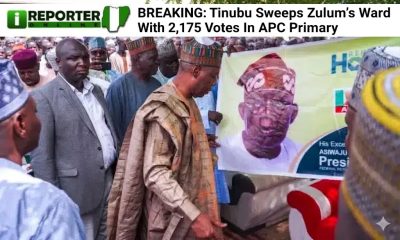
BREAKING: Tinubu Sweeps Zulum’s Ward With 2,175 Votes In APC Primary
-

 Politics6 days ago
APC Drops Full List Of Lagos Assembly, Reps Candidates For 2027 Elections
-

 Latest News2 weeks ago
How I Escaped Abduction During Oyo School Attack – Aminah Speaks