

Latest News
Education Or Exploitation? The Rising Debate Over Assignments Inside Textbooks

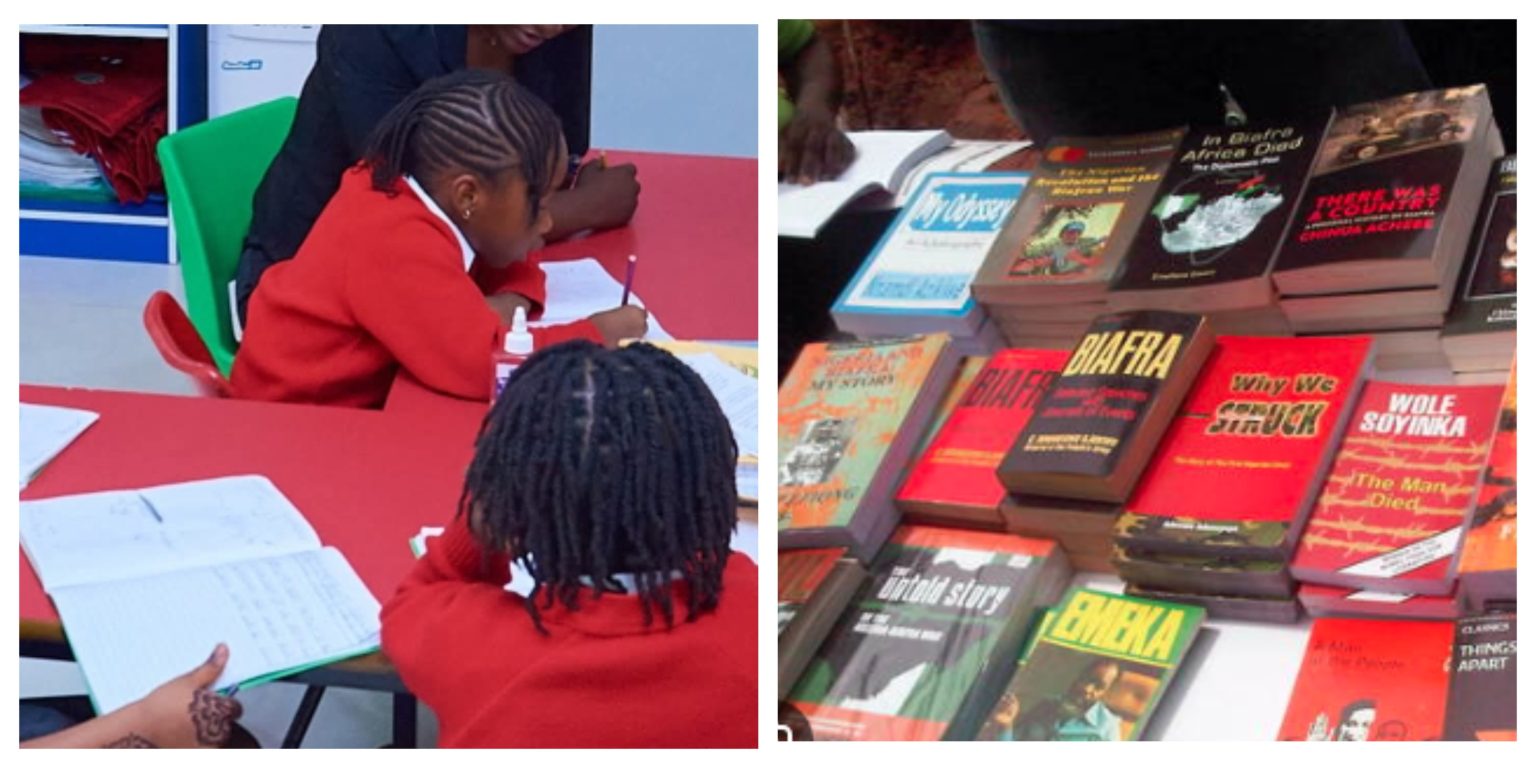
At a time when Nigerians are contending with soaring inflation and a rising cost of living, parents are increasingly voicing concerns over the financial burden of purchasing new textbooks every academic session, particularly when assignments are embedded directly in them, preventing reuse.
Observers note that while the issue could be addressed at the state level, it also represents a national challenge as it directly affects education costs, household finances, and the right of children to access learning without exploitation.
In response, several state governments have taken steps to curb the practice. In Benue State, authorities issued a circular abolishing customised textbooks and exercise books that could not be reused, directing schools to return to the traditional practice where older students hand down books to younger ones.
Similarly, in August 2025, the Edo State government introduced a policy mandating that approved textbooks remain valid for at least four years, beginning from the 2025/2026 academic session. The policy also requires publishers to separate workbooks from textbooks and prohibits schools from insisting on workbook-embedded texts.
Imo State has also moved to restrict annual textbook replacement, mandating that books remain in circulation for at least four years, while in Anambra State, the government banned assignments from being written directly in textbooks to encourage reuse and reduce costs for parents.
These decisions highlight growing recognition that the burden of education now extends far beyond tuition fees, with many families forced to buy the same textbooks multiple times for different children. For parents with several school-aged children, the inability to reuse textbooks has translated into avoidable financial strain.
Speaking to reporters, a parent who requested anonymity revealed she had appealed to her child’s school management for permission to reuse textbooks due to economic pressures. She explained that Mathematics and English textbooks alone cost ₦14,000, while other required texts, notebooks, and stationery amounted to ₦55,000—excluding school fees. To cut costs, she planned to erase pencil markings from previously used books and cover pen marks with correction fluid.
Education stakeholders, however, remain divided on the issue. Ayoluwa-Lanre Akinremi, an educationist and school administrator in Lagos State, described the practice as a “dicey situation” that could either be forward-thinking or regressive, depending on its implementation. She argued that while textbooks naturally have a lifespan due to wear and tear, new books provide children with a stronger sense of ownership, which can boost motivation and responsibility. According to her, relying solely on cost-saving measures may compromise a child’s educational experience and emotional engagement.
On the other hand, Durotimi Adeboye, consultant to the Lagos State Ministry of Basic and Secondary Education and CEO of Global Education Media, strongly opposed the practice. He condemned assignment-filled textbooks as exploitative and environmentally destructive, likening it to genetically modified seeds that cannot be replanted. Adeboye argued that the system is designed by publishers to force continuous purchases, thereby enriching companies while burdening families and harming the environment. He described it as “a conspiracy between educational administrators and textbook suppliers,” stressing that parents are the ultimate victims.
Adeboye further dismissed the argument for textbook replacement unless there is a curriculum change. Citing literary texts such as Things Fall Apart and Julius Caesar, he questioned why students should be compelled to buy new copies of books whose content remains unchanged over decades.
Analysts observe that this ongoing debate reflects a broader struggle between educational innovation and commercial exploitation. While publishers argue for modernisation, parents and experts insist that sustainability, affordability, and equitable access to learning must remain the priority.

-

 Latest News2 weeks ago
 -

 Latest News2 weeks ago
El-Rufai Makes Major Move, Withdraws Three Applications In Corruption Case
-

 Latest News1 week ago
APC Kicks Off 2027 Candidate Upload On INEC Portal
-

 Gist1 week ago
Tinubu Appoints Three Oyo Indigenes To Key Federal Positions
-

 Politics2 weeks ago
Malami Makes Political Move, Names ADC Deputy Gov Candidate In Kebbi
-

 Latest News1 week ago
BREAKING: Okpebholo Suspends Edo Commissioner, LPRES Coordinator
-

 Latest News2 days ago
Full List: 10 AIGs Moved As IGP Disu Reshuffles Police Top Brass
-

 Politics1 week ago
Ikeja Bomb Blast Linked Tinubu, Pedro, Sanwo-Olu — Ex-Aide
-

 Gist3 days ago
Davido Fires Back At MC Oluomo Over Osun NURTW Crisis
-
 Latest News2 weeks ago
Lukman Walks Away From ADC, Faults El-Rufai
-

 Latest News1 week ago
Tinubu Steps In To End Oyo APC Crisis, Meets Folarin
-

 Latest News3 days ago
2027 Elections: APC Uploads 27 Governorship Candidates To INEC Portal