

Latest News
FG Implements Flood Control Measures, Calls On States To Take Action

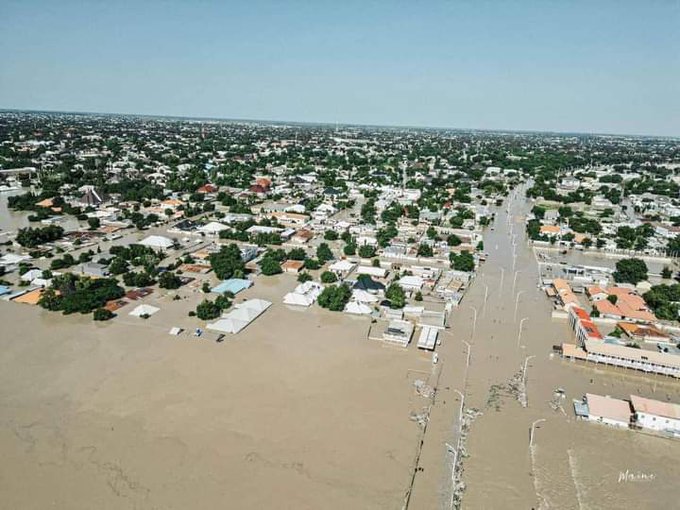
FG Implements Flood Control Measures, Calls On States To Take Action
The Federal Government has activated flood control measures in response to the rising risk of natural disasters in Nigeria, including the recent earth tremors in Mpape, a suburb of the Federal Capital Territory, and the looming threat of severe flooding in Southern Nigeria.
The government has also called on state authorities to take immediate and proactive steps to safeguard communities vulnerable to these hazards.
During a ministerial press briefing on Wednesday in Abuja, the Minister of Innovation, Science, and Technology, Uche Nnaji, disclosed that residents of Mpape, Abuja experienced six to eight tremors late at night, beginning around 11:00 pm on Tuesday.
The main tremor, which occurred at 11:18 pm, was recorded with a magnitude of 3.1 and a focal depth of 11 km, signalling the reactivation of underground fault lines in the area.
Nnaji emphasised that while the tremors themselves were a cause for concern, the real threat facing Nigeria is the risk of widespread flooding in Southern states, particularly as the rainy season continues.
“We are at a critical juncture. Both natural and human-made factors are combining to increase the risks, and we must be vigilant. The time to act is now,” the minister warned.
The recent earth tremors in Mpape, according to data analysed by the Centre for Geodesy and Geodynamics under the National Space Research and Development Agency, were accompanied by several foreshocks and aftershocks.
This, experts say, indicates a gradual buildup of stress beneath the earth’s surface, making future seismic activity in the region possible.
Nnaji stated, “The tremors serve as a reminder that Nigeria is not immune to natural disasters, and we must remain prepared.”
The Federal Government’s focus has shifted toward preventing another major disaster—flooding.
With rising water levels along the River Niger and intense rainfall forecast for the coming weeks, the Nigeria Hydrological Services Agency had earlier issued warnings that many parts of Southern Nigeria are at risk of severe flooding.
Several states have already experienced flash floods, and the situation is expected to worsen if swift action is not taken.
“Flooding poses an even greater threat to lives and livelihoods, particularly in coastal and low-lying areas. States must take responsibility and implement all necessary flood control measures,” Nnaji urged.
He further highlighted that the federal government is ready to support state governments in strengthening early warning systems and building flood-resilient infrastructure.
One of the key technologies being deployed in disaster prevention is the Global Navigation Satellite System receiving stations, which monitor deep underground activities.
The Director General of NASRDA, Mathew Adepoju, speaking on the sidelines of the briefing, praised the advancements in space technology for helping to detect and mitigate natural disasters.
“We want to assure the public that we are actively monitoring the situation. The government is prepared to take appropriate action to protect the people,” he said.
Nigeria has experienced devastating floods in recent years, with thousands of people displaced and billions of naira lost in property damage.
In 2022, major rivers, including the Niger and Benue, overflowed their banks, submerging communities and farmlands. Poor urban planning, blocked drainage systems, and climate change have all contributed to the recurring problem, underscoring the need for a coordinated approach to disaster management.
The government’s current response includes expanding drainage networks, reinforcing riverbanks, and enhancing collaboration between federal, state, and local agencies.
Nnaji emphasised that state governments must not be complacent. “Disaster preparedness is not just a federal responsibility. States must step up and take the lead in safeguarding their communities,” he said.
While the government’s focus is currently on preventing a major flood disaster, it also continues to monitor seismic activity in regions like Mpape.
NASRDA has deployed specialised teams to monitor underground movements and provide real-time data to help predict future tremors.
The Federal Government is urging citizens in high-risk areas to remain alert and follow guidelines issued by local authorities.
Communities are advised to avoid flood-prone areas and report any unusual geological activity.
“We are working to keep people safe, but citizens must also play their part by staying informed and prepared,” Nnaji added.

-

 Latest News2 weeks ago
BREAKING: FG Makes Fresh Appointment
-

 Latest News2 weeks ago
Tinubu Shelves UNGA Trip, Shettima To Lead Nigerian Delegation
-

 Entertainment1 week ago
Nollywood Actress, Nimmy Ferrari Buried In Newly Built House
-

 Latest News2 weeks ago
NDC Rejects INEC List: ‘We Did Not Submit The Names Published
-

 Latest News2 weeks ago
Kwankwaso Breaks Silence After Meeting Peter Obi, NDC Candidates
-

 Latest News2 weeks ago
ICPC Sacks Officer After Sneaking El-Rufai’s Wife Into Facility
-

 Latest News24 hours ago
BREAKING: Akpabio, Oshiomhole, Uzodimma, 1,300 Others Named In INEC List
-

 Latest News2 weeks ago
After 12 Years, Uber Pulls Out Of Nigeria — Full Details Emerge
-

 Latest News1 week ago
Kano: Only Opposition Senator Dumps Party For APC With 136,000 Supporters
-

 Latest News1 week ago
15 Northern States Will Collapse Within 3 Months” — Ogunyemi Hits Atiku Over Subsidy Promise
-

 Latest News2 days ago
2027 Politics: Two Lawmakers Defect To APP
-

 Latest News2 weeks ago
Human Trafficking: NSCDC Rescues 15 Minors Allegedly Sold For ₦2m Each