


Latest News
Finally! Senate Approves New Electoral Act After Lengthy Debates

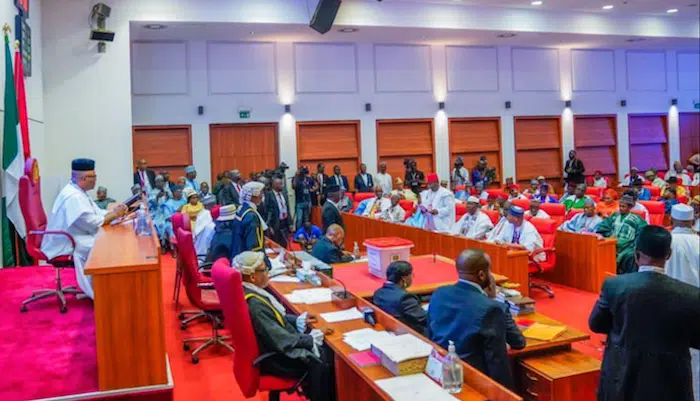
According to Ireporter Online, the Senate on Wednesday passed the Electoral Act, 2022 (Repeal and Enactment) Bill, 2026, bringing to an end its clause-by-clause consideration of the proposed legislation after a detailed review of all 155 provisions.
The passage of the bill comes amid heightened national discourse on electoral reforms ahead of the 2027 general elections. During deliberations, lawmakers approved several amendments, although most clauses were retained in their original form.
A key amendment adopted by the Senate was the reduction of the timeframe for the Independent National Electoral Commission (INEC) to issue a notice of election from 360 days to 180 days before polling day. The change followed a motion sponsored by Senator Tahir Monguno, who maintained that the existing timeline was no longer practical.
Senator Monguno argued that maintaining the 360-day requirement would place INEC at a disadvantage, given the proximity of the next general election. He noted that the revised timeline would enable the electoral body to comply with statutory obligations without being constrained by unrealistic deadlines.
The approval of the bill is regarded as a significant milestone in Nigeria’s ongoing electoral reform process, which has undergone prolonged debate and scrutiny within the National Assembly. The Senate had faced mounting pressure from stakeholders to conclude work on the bill in order to provide INEC with a clear legal framework ahead of the upcoming elections.
Earlier in the week, plenary was adjourned to Wednesday following a closed-door session that lasted more than four hours. Details of the meeting were not disclosed, although the consideration of the Committee on Electoral Matters’ report on the Electoral Act Bill featured prominently on the Order Paper. The bill was sponsored by the committee’s chairman, Senator Simon Bako Lalong.
After the closed session, Senate President Godswill Akpabio declined to reveal specifics of the deliberations, explaining only that discussions centred on issues affecting the Senate and the National Assembly at large.
Subsequently, Senate Leader Opeyemi Bamidele moved a motion for the suspension of remaining legislative business and adjournment to the next sitting day. The motion was seconded by Minority Leader Abba Moro, leading to the adjournment of plenary.
Prior to its passage, the bill had experienced several delays marked by procedural disagreements and repeated closed sessions, prompting concerns among observers that prolonged indecision could affect preparations for the 2027 elections. Some stakeholders had warned that critical reforms, including provisions related to electoral transparency, could be jeopardised if the process dragged on.
INEC has already released its timetable for the 2027 polls, but acknowledged that the final outcome of the Electoral Act amendment could necessitate adjustments to certain activities.
Following its passage by the Senate, the Electoral Act Bill will now be forwarded to the President for assent, after which it will become operational law.

-

 Latest News2 weeks ago
 -

 Latest News2 weeks ago
El-Rufai Makes Major Move, Withdraws Three Applications In Corruption Case
-

 Latest News1 week ago
APC Kicks Off 2027 Candidate Upload On INEC Portal
-

 Gist1 week ago
Tinubu Appoints Three Oyo Indigenes To Key Federal Positions
-

 Politics2 weeks ago
Malami Makes Political Move, Names ADC Deputy Gov Candidate In Kebbi
-

 Latest News1 week ago
BREAKING: Okpebholo Suspends Edo Commissioner, LPRES Coordinator
-

 Latest News2 days ago
Full List: 10 AIGs Moved As IGP Disu Reshuffles Police Top Brass
-

 Politics1 week ago
Ikeja Bomb Blast Linked Tinubu, Pedro, Sanwo-Olu — Ex-Aide
-

 Gist2 days ago
Davido Fires Back At MC Oluomo Over Osun NURTW Crisis
-

 Latest News2 weeks ago
Lukman Walks Away From ADC, Faults El-Rufai
-

 Latest News1 week ago
Tinubu Steps In To End Oyo APC Crisis, Meets Folarin
-

 Latest News3 days ago
2027 Elections: APC Uploads 27 Governorship Candidates To INEC Portal