

Latest News
Electricity Production Costs ₦120 Per Kw/h, Minister Report

Electricity Production Costs ₦120 Per Kw/h, Minister Report
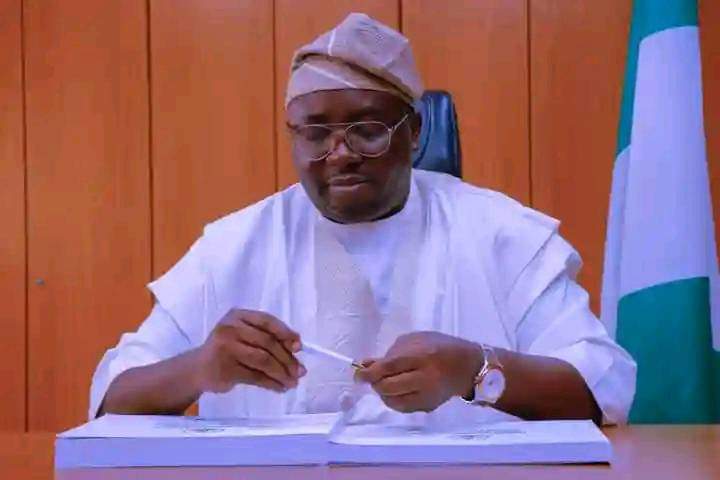
The Minister of Power, Chief Adebayo Adelabu, said it costs N120 to generate 1kilowatt per hour of electricity.
He noted it is why the Federal Government is spending more to subside electricity.
He spoke during an oversight visit by the Members of the House of Committee on Power to his office in Abuja.
Adelabu said the cost does not include other charges paid by power utilities in the Nigerian Electricity Supply Industry (NESI).
“Those in Band A are paying N209 while Band B is paying N65, the average cost of producing one kilowatt per hour of electricity, its generating cost, is not less than N120 before we have the evacuation and wheeling and distribution charges.
“So anybody paying N65 or N58 is paying way below the cost and that is what the Federal Government is still subsidising,” he stated.
He added that the government wants to accelerate the infrastructure in the sector to migrate “as much as possible, more customers to band A. That is what we have achieved today.”
He added that if not for the recent protests, the ministry is considering reviewing the tariff other bands pay to rescue the sector from illiquidity.
“Probably in the next 6 months, we may have to go to the president and present a new tariff policy that will dictate how much will be paid by other bands but we don’t want that route now.
“We just finished the protest and we don’t want anything that will trigger any protest. We have to be very sensitive,” he stressed.
He added that for the first time in three years, the power sector has achieved generation, transmission and distribution of 5,155.99 megawatts of power.
“Precisely on the 8th of August, 2024. When this administration came in, we met an average of 4,000 megawatts of power being generated and transmitted.
“So I believe that 5,000 megawatts is not something we should celebrate.
“But if you look at it from the perspective of 5,000 megawatts, 2,000 megawatts were achieved in 1984, for Nigeria. It took us over 35 years to achieve an additional 2,000 megawatts that took us to 4,000.”


-

 Latest News7 days ago
Tinubu Summons 76 Osun APC Leaders Over Ribadu’s Explosive Intelligence Report
-

 Latest News1 week ago
Tinubu Picks Gbajabiamila, Soludo, Zulum, Others For Canada Investment Mission
-

 Latest News2 weeks ago
Presidency Fires Back At Catholic Bishops
-

 Latest News1 week ago
Tinubu Approves Fresh Civil Service Recruitment Exercise
-
 Latest News1 week ago
Tinubu Launches ₦216bn Osun–Oyo Road Projects
-

 Latest News2 weeks ago
Tinubu Govt Rolls Out Fresh Rules For Ministers, Top Officials
-

 Latest News2 weeks ago
Fuel Price Drops As MRS, Others Slash Petrol Pump Price
-

 Latest News5 days ago
Army Orders Abuja Residents To Vacate Homes Over Security Threat
-

 Latest News4 days ago
Okpebholo Sacks SUBEB Chairman, Names Immediate Replacement
-

 Latest News2 weeks ago
Breaking: Jonathan Holds Closed-Door Meeting With Tinubu At Aso Rock
-

 Latest News2 days ago
Tinubu Approves New Ports Regulator For Nigeria
-

 Latest News2 weeks ago
EFCC Moves To Take Over Abubakar Malami-Linked Properties