


Latest News
Government Should Sell NNPC Refineries To Finance Modular Plants – CORAN

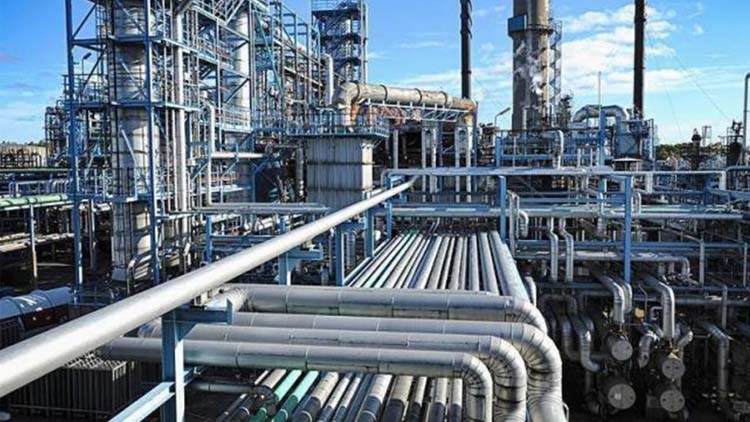
Government Should Sell NNPC Refineries To Finance Modular Plants – CORAN
The Federal Government has been asked to sell the government-owned Port Harcourt, Warri, and Kaduna refineries to fund modular ones.
All three refineries are under the management of the Nigerian National Petroleum Company Limited, the Federal Government’s oil firm.
The Crude Oil Refiners Association of Nigeria made the call for the sale of the refineries in an interview with Sunday PUNCH, saying that it is the only way out of the incessant fuel crisis in the country.
Since over a month ago, Nigerians started to experience fuel queues in filling stations even as the pump price rose to as high as N1,000 per litre in some areas.
Despite promises by the NNPC, the queues have refused to disappear, and this keeps impacting the cost of transportation,
CORAN Publicity Secretary, Eche Idoko, expressed concerns that the Federal Government has expended over $1bn to rehabilitate the Port Harcourt refinery, yet the facility has yet to start production despite six postponements.
Idoko argued that the fuel queues would not go away unless the country starts refining its crude locally.
According to him, modular refineries should be given intervention funds which would also give the government stakes in the refineries.
He noted that the reason for the fuel crisis in Nigeria was that the country does not have enough refined products as the cost of importing fuel with foreign exchange is a burden on the government, especially when subsidy payment is involved.
“We are not asking for free money. The government should set up an intervention fund in which people can access credit. So, it’s not free money. There are a lot of intervention funds in the agricultural sector,” Idoko said.
He spoke further, “The $1.5bn spent on the Port Harcourt refinery could be used to develop 10 modular refineries to be able to produce PMS of a minimum of 10,000 barrels per day. That is about 100,000 barrels a day.
“And if you have 100,000 barrels per day, at least, with the Dangote refinery, you would have solved that problem. We would actually have enough to begin to export,” he stated.
Idoko maintained that no one else could import PMS because of the government subsidy and the lack of foreign exchange.
Suggesting a way out of repeated fuel scarcity, he said, “The low-hanging fruit is simply to empower the modular refineries.
A modular refinery takes an average of 12 to a maximum of 18 months to set up. This administration can identify and select from the modular refineries that are already on stream to support them.
“Right now, we have about 15 of them – five are operating but not producing PMS; the other 10 are at various stages of completion. If the government supported these 15 modular refineries to produce PMS, in about 12 months or less, they would have solved this problem of fuel scarcity, rather than say, you are putting money into the Port Harcourt refinery, Warri refinery, or Kaduna refinery.
“That was why there was a particular administration that tried to sell those facilities. Most of them are obsolete. Technology has changed. I would have said that the government should sell them off. We know that the issue of fuel crisis is a serious issue, but do we have a solution to it now? We don’t have a quick-fix solution other than what is being done right now, which is importation.
“But that is simply not sustainable. For how long can you continue like this? And so, what we are saying is that give yourself a target of the time to completely wind down the importation of petroleum products. Bring stakeholders like the modular refineries and the traders together. We will all put our heads together and then work out a scheme.”
Idoko added that in countries where there is self-sufficiency, the private sector drives the oil refinery segment.
“Saudi Aramco is a purely private-loaned entity. It has shares, it has boards, it runs as a private entity. In the United States, in all the countries where you are seeing self-sufficiency in their refineries, the private sector takes the lead. All the government does is to create an enabling environment to provide support,” he submitted.
The NNPC said it spent over N9.3tn to import petrol in 2023.
After many months of denying subsidy payment, the firm confirmed on Monday that it imports petrol and sells at 50 per cent below the landing cost, saying the government pays the shortfall.
Many have argued that this is why the NNPC is having challenges to import enough petrol for Nigerians.

-
 Latest News1 day ago
BREAKING: Tinubu Makes Fresh Appointment
-

 Latest News2 weeks ago
BREAKING: Okpebholo Suspends Edo Commissioner, LPRES Coordinator
-

 Latest News6 days ago
Full List: 10 AIGs Moved As IGP Disu Reshuffles Police Top Brass
-

 Gist6 days ago
Davido Fires Back At MC Oluomo Over Osun NURTW Crisis
-

 Politics2 weeks ago
Ikeja Bomb Blast Linked Tinubu, Pedro, Sanwo-Olu — Ex-Aide
-

 Latest News16 hours ago
Presidency Fires Back At Catholic Bishops
-

 Latest News1 day ago
Wike Breaks Silence On ₦750m Campaign Billboard Fee
-

 Latest News7 days ago
2027 Elections: APC Uploads 27 Governorship Candidates To INEC Portal
-

 Latest News2 weeks ago
Tinubu Steps In To End Oyo APC Crisis, Meets Folarin
-

 Latest News5 days ago
PHILLIPS CONSULTING INDEX: WHY THE FINDINGS REFLECT EDO’S INHERITED FISCAL BURDEN—NOT OKPEBHOLO’S RECORD
-

 Latest News6 days ago
I’m Irritated’ – Aisha Yesufu Slams Peter Obi’s TV Interview
-

 Latest News3 days ago
‘Football Is Not For Sale’ – FIFA Fires Back Amid World Cup Investment Backlash