
Latest News
Nigeria’s Economic Growth In Danger Due To Inflation And Food Price Hikes, Warns AfDB

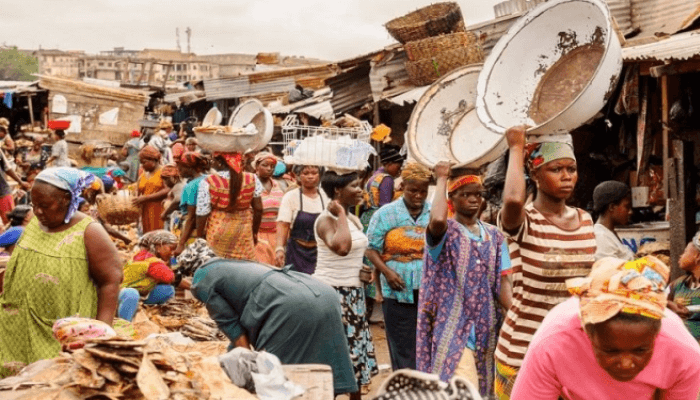
Nigeria’s Economic Growth In Danger Due To Inflation And Food Price Hikes, Warns AfDB
The continuous rise in food prices and inflation has been identified as a setback that could impede Nigeria’s 2024/2025 growth projections of 3.2 percent and 3.4 percent.
According to the ‘Nigeria Country Focus Report’ launched by the African Development Bank on Thursday, over 63 percent of Nigerians are still multidimensionally poor, with 18 out of 36 states recording poverty levels above the national average.
The report highlighted that high poverty rates reflect the impacts of economic shocks, policy, and structural challenges that undermine private investment needed to create quality jobs.
Presenting the report, Jacob Oduor, the lead economist for the Nigeria Country Department at AfDB, stated that inflation remains a significant issue in Nigeria, surpassing both the West African and African averages. He noted that the country’s fiscal position is expected to improve, supported by increased revenue from ongoing reforms.
Oduor identified specific risks, including insecurity affecting food, agricultural, and oil production. He stated that although growth is expected to reach 3.2 percent in 2024 and 3.4 percent in 2025, it remains below the West African and African averages. Persistent inflation and rising food prices are likely to dampen consumption and further hinder growth.
Oduor also mentioned anticipated pressures on exchange rates, which could lead to imported inflation, impacting the general population’s consumption basket. He suggested maintaining the current tight monetary policy cautiously to avoid increasing the monetary policy rate too quickly, which could raise production costs.
Furthermore, Oduor emphasized the need for social protection measures targeting the most vulnerable to ensure that benefits reach those who need them. He also stressed the importance of continuing tax administration reforms to increase the tax base and improving security to boost food and crude oil production.
In the long term, Oduor highlighted the need for infrastructure development, particularly in energy supply, including developing refinery capacity to maintain fuel prices and address the government’s implicit subsidy burden.
He pointed out that the pace of structural transformation has been insufficient for industrial takeoff, leading to labor shifts from agriculture to less productive sectors. The report indicated that more than half of Nigeria’s workforce is employed in sectors less productive than the economy-wide average, with the manufacturing sector experiencing little or negative productivity growth.
The AfDB report estimates that Nigeria will need $47.6 billion annually until 2030 to accelerate structural transformation, with significant resources required to support SDG9 on industry, innovation, and infrastructure.
Lamin Barrow, Director General of the Nigeria Country Department at AfDB, noted that Nigeria’s GDP growth slowed to 2.9 percent in 2023, down from 3.3 percent in 2022, due to high inflation, low oil production, and a weakening global economy. He projected a slight recovery to 3.2 percent in 2024 and 3.4 percent in 2025, stressing the need for the Nigerian government to prioritize structural transformation measures, including infrastructure development and domestic revenue mobilization.
Barrow highlighted the need for innovative policy responses to close the financing gap for structural transformation, including proper valuation of Nigeria’s critical and rare earth minerals to generate additional resources.
Atiku Bagudu, the Minister of Budget and Economic Planning, echoed these concerns, noting that underinvestment and poor access to capital are major challenges hindering Nigeria’s economic growth. He emphasized the need for equitable access to capital to unlock the potential of sectors like agriculture, which has been a source of conflict rather than economic growth due to insufficient investment.


-
 Latest News2 weeks ago
Tinubu Summons 76 Osun APC Leaders Over Ribadu’s Explosive Intelligence Report
-
 Latest News1 day ago
Tinubu Govt Declares Nationwide Public Holiday For Nigerians
-

 Latest News2 weeks ago
Army Orders Abuja Residents To Vacate Homes Over Security Threat
-
 Latest News2 weeks ago
Okpebholo Sacks SUBEB Chairman, Names Immediate Replacement
-
 Latest News1 week ago
Tinubu Approves New Ports Regulator For Nigeria
-

 Latest News4 days ago
Tinubu Meets Akpabio, Doguwa, Oyetola, Alake At Aso Rock
-

 Latest News6 days ago
INEC Makes Fresh Announcement After Declaring Adeleke Winner Of Osun Election
-
 Latest News1 week ago
Edo Gov Reshuffles Cabinet, Creates New Ministry — Full List
-

 Gist1 week ago
Your Uncle Adeleke Is The Real Arindin’ – Sowore Fires Back At Davido
-

 Latest News2 weeks ago
JUST IN: Osun Commissioner Arrested Over Shooting At APC Rally
-

 Entertainment4 days ago
Ogogo’s Family Breaks Silence, Debunks Viral D**th Rumour
-

 Latest News1 week ago
Osun Election: INEC Gives Fresh Update As Voting Continues