


Latest News
“Cameras Could Save Lives” — Security Specialist Speaks As School Abductions Surge Again

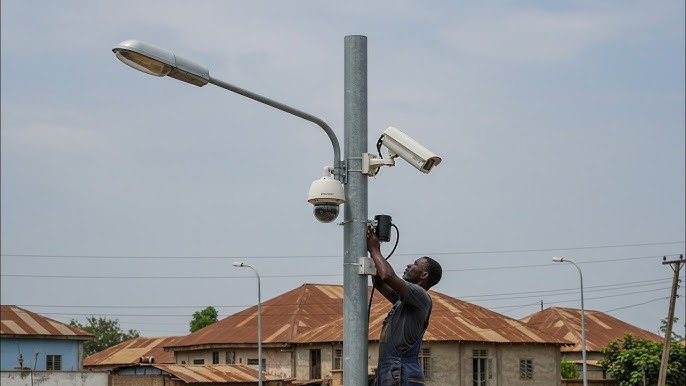
According to Ireporter Online, Nigeria is once again grappling with a troubling surge in student abductions as insecurity intensifies across the country. From tertiary institutions to secondary schools and basic education centres, fear is rising as criminal groups identified as armed bandits continue to target learning environments.
More than a decade after the infamous 2014 Chibok schoolgirls’ kidnapping in Borno State—one of the darkest moments in Nigeria’s recent history—the nation is witnessing patterns that mirror those horrific events. The latest incident in Kebbi State, where armed men stormed Government Girls Comprehensive Secondary School in Maga and whisked away 25 students during a pre-dawn assault, has renewed nationwide anxiety and international concern.
Higher institutions have also suffered repeated attacks in recent years. Incidents at Greenfield University in Kaduna, the Federal College of Forestry Mechanisation in Afaka, and the Confluence University of Science and Technology in Kogi State have underscored the vulnerability of campuses to violent raids. These disruptions have created long-term psychological, social, and economic damage for families, with many parents reconsidering sending their children to school out of fear.
Experts say the inability to track, arrest, and prosecute perpetrators has further encouraged the criminals, as many cases end in quiet negotiations rather than justice.
In a recent interview, technology and security specialist Engr. Rosiji Jacob Oluwafemi, CEO of Triquantum Innovations Ltd, expressed deep concern over the escalating insecurity. He explained that modern surveillance systems could significantly enhance school safety. According to him, CCTV technology has evolved beyond simple recording and now features motion analytics, night-vision capabilities, perimeter alerts, and AI-driven behaviour detection.
He noted that even in remote or high-risk locations, well-planned camera systems can provide early warning signals and reduce the element of surprise during attacks. Although CCTV may not prevent every incident, Oluwafemi emphasized that it dramatically improves response time and deters criminals who fear being identified.
Responding to questions about whether cameras would have influenced the outcome of the recent Kebbi kidnapping, he said real-time visuals would have assisted security agencies in understanding the attackers’ movement, numbers, and escape route, thereby speeding up pursuit and investigation.
Beyond schools, Oluwafemi advised that ordinary citizens can now access affordable, user-friendly surveillance tools such as Wi-Fi cameras, solar-powered outdoor monitors, and smart doorbells that provide instant alerts. He stressed that even minimal camera installations around entry points can discourage break-ins, as criminals often avoid digitally monitored homes.
Discussing wider public safety, he said well-deployed surveillance systems in markets, car parks, transport hubs, and major roads significantly enhance crime prevention, crowd management, and emergency response. According to him, coordinated visuals from multiple camera feeds help security operatives follow suspects more efficiently instead of relying on guesswork.
While acknowledging ongoing government efforts, he recommended a long-term national plan that includes integrated surveillance networks, central monitoring hubs staffed by trained analysts, partnerships with tech companies, and clear policies on data management and privacy. He added that a coordinated system would shift Nigeria from reactive measures to intelligence-led security operations.
Addressing Nigerians who still doubt the value of surveillance technology, Oluwafemi stressed that crime has evolved and the country must adapt. He maintained that cameras do not replace security personnel but strengthen their effectiveness, protect communities, and provide critical evidence that has been lacking in many unresolved security cases.

-
 Latest News2 weeks ago
Full List: Tinubu Gives Approval For New Appointments
-

 Latest News2 weeks ago
Kaduna APC House Of Reps Aspirant Pulls Out Of The Race
-
 Latest News2 weeks ago
Full List: NJC Recommends 12 Justices For Court Of Appeal, Suspends Two Judges Over Misconduct
-

 Latest News1 week ago
APC Primaries: Full List Of Reps Members Who Secured Return Tickets, State-By-State Breakdown
-

 Latest News7 days ago
APC Announces Winners Of Senate And House Of Reps Primaries In Plateau State
-

 Latest News2 weeks ago
Bola Tinubu, Fubara, Hope Uzodimma, APC Governors, Senators, Reps Await Fate Today
-

 Latest News6 days ago
2027: Updated List Of APC Senatorial Candidates So Far
-

 Latest News2 weeks ago
Full List: APC Publishes Names Of Disqualified House Of Representatives Aspirants
-

 Latest News6 days ago
BREAKING: Fubara Pulls Out Of APC Governorship Primary Election
-

 Latest News6 days ago
Tinubu Speaks Out, Says “They Want Me Dead” Over Alleged Cabal Behind Nigeria’s Insecurity
-

 Latest News5 days ago
List Of APC Governorship Candidates Who Have Emerged For The 2027 Elections
-

 Latest News2 weeks ago
Fresh Crisis Rocks APM As Makinde And Bala Mohammed Loyalists Tighten Grip