
Latest News
2027 Elections: Will Bigger Campaign Spending Really Deliver More Votes?

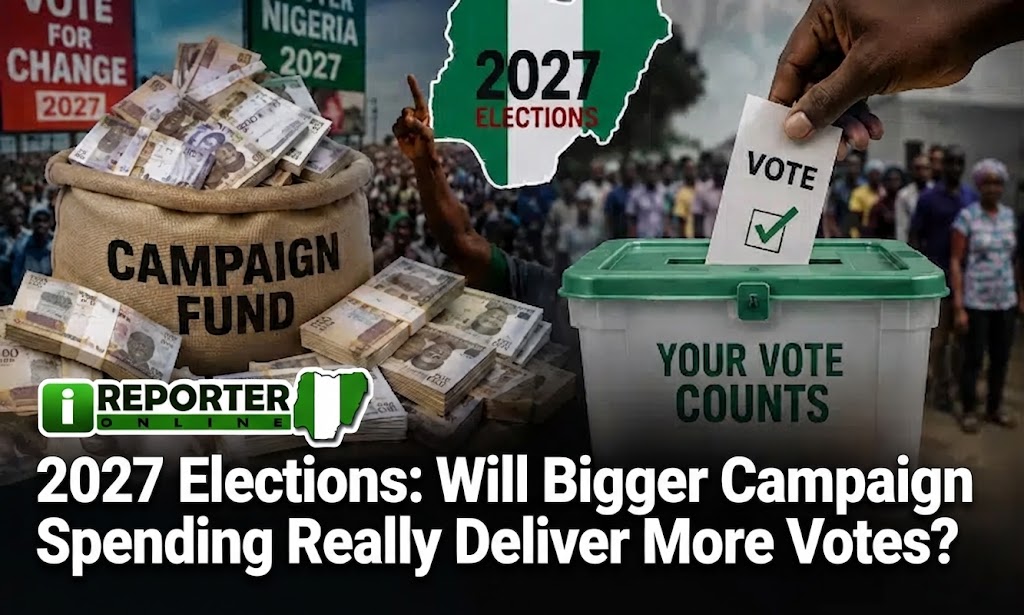
With the 2027 general election drawing closer, political parties and candidates are already intensifying preparations through rallies, media campaigns, grassroots mobilisation and other strategies aimed at securing voters’ support.
According to Ireporter Online, the increasing cost of political campaigns has renewed debate over whether the amount of money spent by candidates can significantly influence electoral outcomes, particularly following the recently concluded Osun State governorship election.
The Osun contest, which largely centred on Governor Ademola Adeleke of the Accord Party and the All Progressives Congress (APC) candidate, Bola Oyebamiji, witnessed extensive mobilisation by both parties.
The APC, in particular, deployed a strong national campaign structure, with governors, lawmakers, party leaders and other prominent figures travelling to Osogbo to campaign for its candidate.
Despite the scale of its mobilisation, however, the party failed to secure victory. The Independent National Electoral Commission (INEC) declared Adeleke the winner after he polled 511,067 votes against Oyebamiji’s 444,815, giving him a winning margin of 66,252 votes.
Adeleke secured victory in 19 of the state’s 30 local government areas, while Oyebamiji won in 11.
The outcome has raised questions about the relationship between campaign expenditure and electoral success, particularly as parties prepare for what is expected to be a more expensive 2027 election.
Concerns over campaign-related costs have already emerged in several states. In Abia State, the African Democratic Congress (ADC) rejected proposed outdoor campaign advertising fees that would require presidential candidates to pay as much as ₦200 million and governorship candidates ₦150 million.
Other candidates were also assigned substantial fees, with senatorial candidates expected to pay ₦150 million, House of Representatives candidates ₦50 million and State Assembly candidates ₦20 million.
The ADC criticised the charges, arguing that they were excessive and could conflict with legal limits on campaign expenditure.
African Action Congress (AAC) presidential candidate Omoyele Sowore also condemned the policy and accused Abia State Governor Alex Otti of imposing unreasonable campaign advertising charges.
Similar developments have been recorded in Cross River State, where the Cross River State Signage and Advertisement Agency fixed a ₦150 million tariff for presidential candidates seeking to place outdoor campaign advertisements ahead of the 2027 election.
Governorship candidates were assigned a ₦100 million fee, while senatorial candidates were expected to pay ₦50 million. House of Representatives and State Assembly candidates were assigned ₦25 million and ₦5 million respectively.
The agency said the measures were intended to regulate advertising spaces and ensure fairness among political parties and candidates. It also warned that defaulters could have campaign materials removed, face fines or be prosecuted.
In Kogi State, the Peoples Democratic Party (PDP) also rejected newly introduced campaign signage fees, describing them as excessive and potentially harmful to political participation.
The party argued that high campaign-related charges could place opposition parties and candidates with limited financial resources at a disadvantage.
Against this backdrop, public finance expert and Executive Director of the Centre for Inclusive Social Development, Folahan Johnson, has cautioned against assuming that higher campaign spending automatically translates into more votes.
According to Johnson, the more important measure is the cost per vote rather than the total amount spent by a candidate.
He explained that a candidate who spends less but secures almost the same number of votes as a rival who spends significantly more could be considered more efficient.
Johnson also warned that factors such as incumbency, party structure, popularity and existing voter loyalty must be separated from campaign expenditure when assessing the impact of money on election results.
He said there is also a point where additional spending on advertisements, rallies and mobilisation may stop attracting new voters, resulting in resources being spent on people who had already decided whom to support.
While acknowledging that money would remain an important factor in the 2027 election, Johnson stressed the need to distinguish legitimate campaign expenditure from vote buying.
He explained that campaign spending generally covers activities such as advertising, rallies, logistics and voter mobilisation aimed at persuading the electorate, whereas vote buying involves providing cash or other incentives to voters in exchange for their support.
As political parties prepare for the 2027 contest, the debate over campaign finance, expensive advertising tariffs and the influence of money on electoral outcomes is expected to remain a major issue.

-
 Latest News2 days ago
Tinubu Govt Declares Nationwide Public Holiday For Nigerians
-

 Latest News2 weeks ago
Army Orders Abuja Residents To Vacate Homes Over Security Threat
-
 Latest News2 weeks ago
Okpebholo Sacks SUBEB Chairman, Names Immediate Replacement
-
 Latest News1 week ago
Tinubu Approves New Ports Regulator For Nigeria
-

 Latest News5 days ago
Tinubu Meets Akpabio, Doguwa, Oyetola, Alake At Aso Rock
-

 Latest News7 days ago
INEC Makes Fresh Announcement After Declaring Adeleke Winner Of Osun Election
-
 Latest News1 day ago
APC Chairman Collapses, D!es
-
 Latest News1 week ago
Edo Gov Reshuffles Cabinet, Creates New Ministry — Full List
-

 Gist1 week ago
Your Uncle Adeleke Is The Real Arindin’ – Sowore Fires Back At Davido
-

 Entertainment5 days ago
Ogogo’s Family Breaks Silence, Debunks Viral D**th Rumour
-
 Latest News1 week ago
Osun Election: INEC Gives Fresh Update As Voting Continues
-

 Latest News2 weeks ago
Osun Election: Police Ban Amotekun, Vigilantes As Thugs, Vote-Buyers Face Arrest