


Latest News
Senate Explains Why FCT Won’t Have State Police Under New Plan

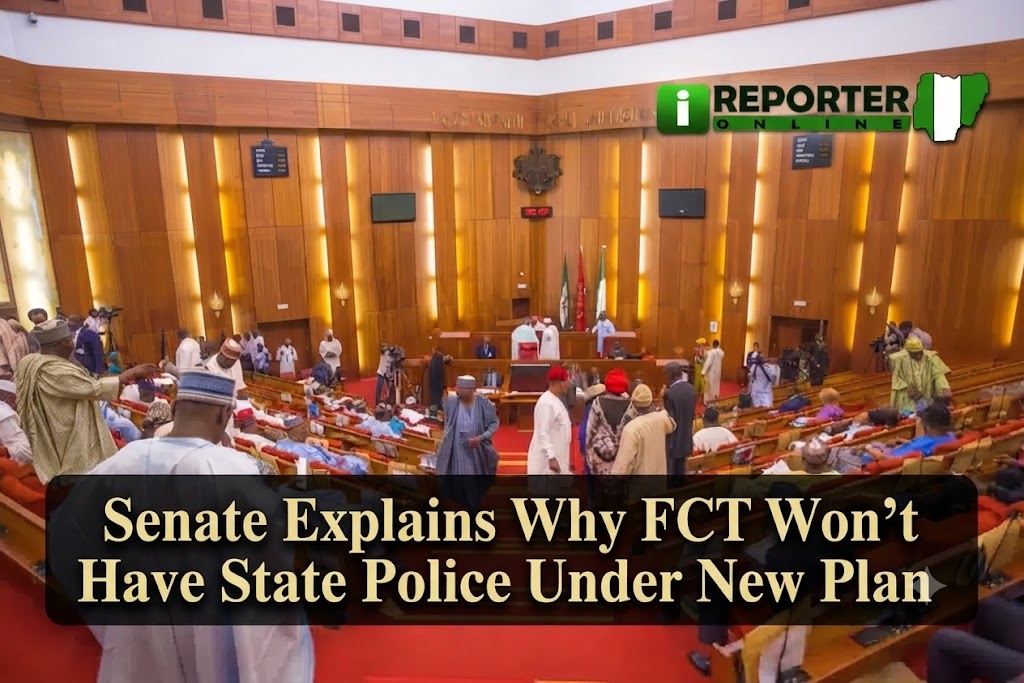
The Senate has explained why the Federal Capital Territory (FCT) will not be included in the proposed state police structure currently being considered as part of Nigeria’s policing reforms.
Chairman of the Senate Committee on Media and Publicity, Senator Yemi Adaramodu, said the FCT was excluded because it does not have the constitutional institutions associated with Nigeria’s 36 states, including an elected governor and a state House of Assembly.
According to IReporter Online, Adaramodu made the clarification on Friday while addressing concerns over the proposed decentralisation of policing across the country.
The lawmaker explained that the FCT operates under the direct authority of the Federal Government and is administered by a minister who serves within the Federal Executive Council.
He noted that, unlike the states, the FCT does not have an elected governor or an independent legislative assembly. Instead, legislative responsibilities for the territory are handled by the National Assembly.
Adaramodu therefore stated that the Nigeria Police Force would remain responsible for policing the FCT under the proposed arrangement.
The clarification comes amid renewed efforts by the Federal Government to reform Nigeria’s policing system following years of calls for the creation of state police.
The Presidency has indicated that President Bola Tinubu is expected to receive the draft Executive National Policing Bill on September 3 as part of efforts to overhaul the country’s security architecture.
Chief of Staff to the President and Chairman of the Presidential Working Group on the National Policing Bill, Femi Gbajabiamila, disclosed the development after a meeting of the group at the Presidential Villa in Abuja.
He also announced a public information portal through which Nigerians can submit memoranda and position papers on the proposed legislation.
The planned constitutional amendment is expected to provide the legal framework for state police, while the Executive National Policing Bill would establish the operational structure for the new policing system.
Under the proposed framework, state Houses of Assembly would have authority to legislate on the establishment, administration, funding and oversight of state police formations.
The states would also bear the major responsibility for financing their respective police formations, although federal grants or other forms of assistance could be made available.
A proposed constitutional provision would allow the Federal Government to provide grants or assistance to state police based on recommendations from the National Police Council and approval by the National Assembly.
However, the proposal does not currently establish a fixed federal contribution or guaranteed funding formula for state police.
For the FCT, the existing federal administrative structure means policing responsibilities would remain under the Federal Government rather than being transferred to a state-level authority.
Adaramodu maintained that the constitutional status of the FCT makes its situation different from that of the 36 states, explaining why it would remain under federal policing even if the proposed state police system becomes law.

-

 Latest News2 days ago
Tinubu Picks Gbajabiamila, Soludo, Zulum, Others For Canada Investment Mission
-
 Latest News7 days ago
BREAKING: Tinubu Makes Fresh Appointment
-

 Latest News2 weeks ago
Full List: 10 AIGs Moved As IGP Disu Reshuffles Police Top Brass
-
 Latest News6 days ago
Presidency Fires Back At Catholic Bishops
-

 Gist2 weeks ago
Davido Fires Back At MC Oluomo Over Osun NURTW Crisis
-

 Latest News7 days ago
Wike Breaks Silence On ₦750m Campaign Billboard Fee
-

 Latest News5 days ago
Tinubu Govt Rolls Out Fresh Rules For Ministers, Top Officials
-

 Latest News2 weeks ago
2027 Elections: APC Uploads 27 Governorship Candidates To INEC Portal
-

 Latest News2 weeks ago
PHILLIPS CONSULTING INDEX: WHY THE FINDINGS REFLECT EDO’S INHERITED FISCAL BURDEN—NOT OKPEBHOLO’S RECORD
-
 Latest News2 days ago
Tinubu Launches ₦216bn Osun–Oyo Road Projects
-

 Latest News2 days ago
Tinubu Approves Fresh Civil Service Recruitment Exercise
-

 Latest News1 week ago
‘Football Is Not For Sale’ – FIFA Fires Back Amid World Cup Investment Backlash