

Latest News
“Nigeria Faces Triple Health Crisis As TB, HIV, And Malaria Surge—Activists Demand Urgent Action”

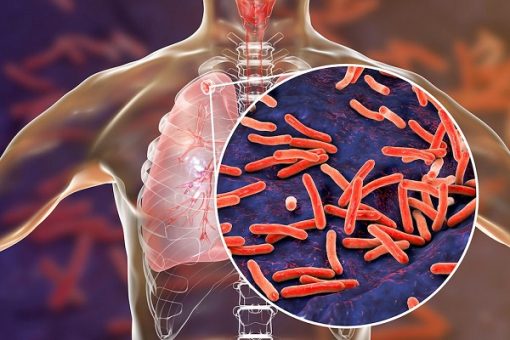
According to Ireporter Online, a coalition of civil society organisations under the banner of the ATM Networks has raised alarm over Nigeria’s growing burden of tuberculosis (TB), malaria, HIV/AIDS, and gender-based violence (GBV), calling for immediate government and private sector intervention to tackle the crisis.
Speaking at a media briefing in Lagos, Mrs. Meg Aipoh, the Lagos State Coordinator of the TB Network and Team Lead for ATM Coordinators, lamented that Nigeria remains one of the top 30 countries globally with the highest TB and TB-HIV co-infection rates. The country also records the highest malaria incidence in the world and ranks second in HIV/AIDS prevalence in Africa.
“These diseases do not operate in isolation,” Aipoh warned. “When they occur together, they compound one another and increase transmission risks. They thrive in poverty and marginalisation, making this a public health and ethical emergency that demands swift collective action.”
The coalition highlighted that socio-economic inequalities continue to sustain high infection rates, as poor families often lack access to quality healthcare, education, and preventive tools. Although TB treatment is officially free, many patients still bear hidden costs such as transportation, discouraging them from seeking care, especially in rural areas.
Aipoh further noted that malaria remains a leading killer of Nigerian children under five, largely because many parents cannot afford hospital bills. “If we fail to address the economic barriers to healthcare, we will keep losing lives unnecessarily,” she said.
The ATM Networks—comprising the TB Network, NEPWHAN, and ACOMIN—are collaborating with the National Agency for the Control of AIDS (NACA) under the COVID-19 Response Mechanism and Resilient and Sustainable Systems for Health (C19RM) Grant, supported by the Global Fund. The initiative currently operates in 21 states, 105 local government areas, and 315 health facilities across Nigeria.
The coalition employs a Community-Led Monitoring (CLM) approach that empowers communities to identify service delivery gaps, advocate for improvements, and enhance accountability in the fight against TB, HIV, and malaria. In Lagos, several Primary Healthcare Centres (PHCs) have recently benefited from this initiative, with upgrades such as renovated buildings, new water facilities, consumable supplies, mattresses, and medical equipment.
However, civil society leaders warned that progress remains constrained by weak coordination, inadequate funding, and heavy dependence on foreign donors. They urged the government to create a National Community System Strengthening Framework to unify community actors and ensure sustainable collaboration with both government and private stakeholders.
They also called for increased domestic funding for TB, HIV, and malaria programmes to reduce reliance on donor funds and for greater integration of such services into the national health insurance scheme. “Resource mobilisation is not just about funding; it’s about ownership. Nigeria must take full responsibility for its health programmes if elimination is the goal,” Aipoh stressed.
The coalition further linked the health crisis to rising cases of gender-based violence (GBV), describing it as “a silent epidemic undermining health and human rights.” Forms of GBV such as domestic violence, rape, child marriage, and female genital mutilation were said to heighten health risks for women and children, thereby fueling the spread of infections.
The activists urged authorities to strengthen Nigeria’s health system through inclusive and transparent policies, expand health insurance coverage for vulnerable citizens, and ensure primary healthcare funds are properly managed. They also recommended wider awareness campaigns and the creation of a centralised Community-Led Monitoring data platform to improve health planning and accountability.
Calling for unity among all health stakeholders, Aipoh concluded, “The fight against TB, HIV, malaria, and GBV is not just a medical struggle—it is a fight for justice and equity. Communities must rise to defend their own health. If you see something, speak up.”

-

 Latest News2 weeks ago
APC Kicks Off 2027 Candidate Upload On INEC Portal
-

 Gist2 weeks ago
Tinubu Appoints Three Oyo Indigenes To Key Federal Positions
-

 Latest News2 weeks ago
BREAKING: Okpebholo Suspends Edo Commissioner, LPRES Coordinator
-

 Latest News4 days ago
Full List: 10 AIGs Moved As IGP Disu Reshuffles Police Top Brass
-

 Gist5 days ago
Davido Fires Back At MC Oluomo Over Osun NURTW Crisis
-

 Politics2 weeks ago
Ikeja Bomb Blast Linked Tinubu, Pedro, Sanwo-Olu — Ex-Aide
-

 Latest News5 days ago
2027 Elections: APC Uploads 27 Governorship Candidates To INEC Portal
-

 Latest News1 week ago
Tinubu Steps In To End Oyo APC Crisis, Meets Folarin
-

 Latest News3 days ago
PHILLIPS CONSULTING INDEX: WHY THE FINDINGS REFLECT EDO’S INHERITED FISCAL BURDEN—NOT OKPEBHOLO’S RECORD
-

 Latest News4 days ago
I’m Irritated’ – Aisha Yesufu Slams Peter Obi’s TV Interview
-

 Latest News1 week ago
Aisha Achimugu Raises Alarm, Accuses EFCC Of Rights Violations
-

 Latest News5 days ago
FG Sets Aside ₦962.83bn For SUVs, Empowerment Projects