
Latest News
Lai Mohammed Reveals Nigeria’s ‘Next Oil’ That Could Transform Economy

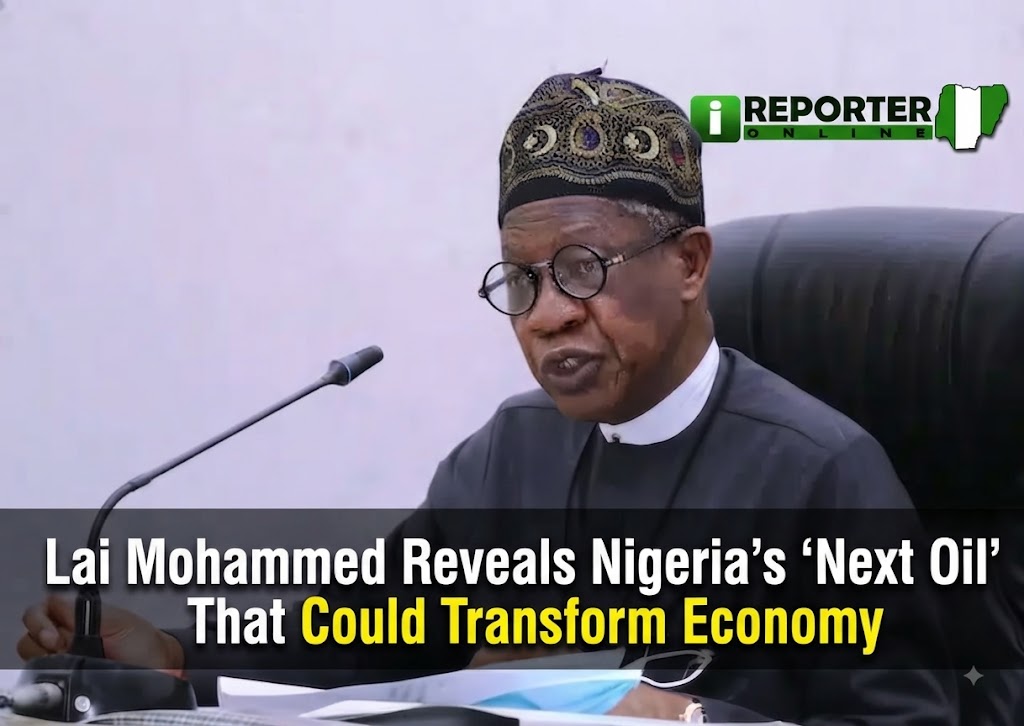
Former Minister of Information and Culture, Lai Mohammed, has identified Nigeria’s creative industry as the country’s potential “next oil,” arguing that the sector could play a major role in driving economic growth and creating employment opportunities.
Mohammed made the assertion in Abuja during a meeting involving the leadership of the National Institute for Policy and Strategic Studies (NIPSS) and the Minister of Art, Culture, Tourism and the Creative Economy, Hannatu Musawa.
The meeting focused on exploring strategies to harness the creative sector as part of efforts to support President Bola Tinubu’s ambition of expanding Nigeria’s economy to $1 trillion by 2030.
Speaking at the gathering, Mohammed, who serves as Managing Partner of Bruit Costaud, a consulting firm involved in preparations for the forthcoming National Summit and Exhibition on the Orange Economy, stressed the enormous economic potential of Nigeria’s creative and cultural industries.
He argued that the country must reduce its dependence on crude oil by investing more aggressively in sectors such as film, music, fashion, publishing, gastronomy and sports.
According to him, Nigeria’s creative economy has the capacity to generate significant employment while contributing substantially to national development.
Mohammed said the creative sector should be treated as a major component of the country’s economic strategy because of the large number of people already involved in various aspects of the industry.
He further described the Ministry of Art, Culture, Tourism and the Creative Economy as one of the country’s most important ministries, particularly because of its potential to stimulate employment and economic activity.
Also speaking, NIPSS Director-General Ayo Omotayo said the institute had aligned its research activities with the Federal Government’s economic development agenda, including the target of achieving a $1 trillion economy by 2030.
Omotayo explained that NIPSS had identified several sectors capable of contributing to the economic target and had chosen the creative industry for further research because of its largely untapped potential.
He noted that despite the growing importance of arts, culture and entertainment, the sector had not received sufficient policy research and strategic attention.
The NIPSS director-general said the planned summit would provide an opportunity to develop practical ideas and policies capable of unlocking the sector’s economic potential.
He also pointed to the rapid advancement of technology, noting that digital innovation had created new opportunities for the creative industry and could help Nigeria expand its contribution to the global creative economy.
The stakeholders expressed optimism that stronger collaboration between government institutions, industry players and policymakers could position Nigeria’s creative sector as a major engine of economic growth and support the country’s broader ambition of achieving a $1 trillion economy by 2030.

-
 Latest News2 weeks ago
Tinubu Govt Declares Nationwide Public Holiday For Nigerians
-
 Entertainment2 weeks ago
₦800,000, ₦5m, $11,000: Ogogo’s Daughter Accuses Nigerians Of Exploiting Father’s Cancer
-
 Latest News1 week ago
Uzodinma Won’t Market Tinubu To Igbos’ – Oshiomhole Reveals Who Should Help
-
 Latest News2 weeks ago
APC Chairman Collapses, D!es
-

 Latest News1 week ago
FG Announces New Appointment
-
 Latest News2 weeks ago
Tinubu Renews Appointments In NTA, NAN
-
 Latest News1 week ago
Tinubu Reviews APC Campaign Council Over ‘Corrupt’ Names — See Who Escaped the Shake-Up
-
 Entertainment1 week ago
‘Please Forgive Me’ – Ijebu Begs Colleagues After Ogogo’s D**th
-
 Latest News7 days ago
Malami Sends Strong Message To ADC Members Ahead Of 2027 Elections
-
 Latest News2 weeks ago
Full List: Meet Members Of New Fake Agency Uncovered By ICPC
-
 Latest News1 day ago
BREAKING: FG Makes Fresh Appointment
-

 Latest News2 weeks ago
TINUBU UNLEASHES 2027 CAMPAIGN MACHINE: YARI TAKES COMMAND, UZODIMMA GETS KEY ROLE, OSHIOMHOLE TO LEAD MOBILISATION