Connect with us

Latest News

NCC Raises Alarm Over Shortage Of Learning Materials For The Visually Impaired

Published

on

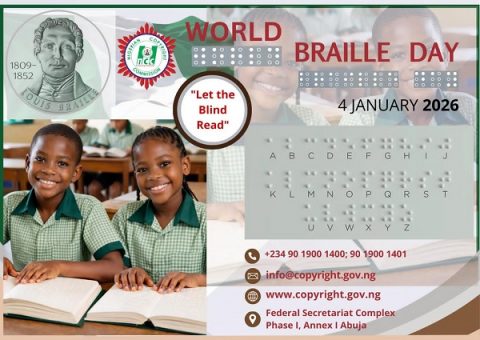
IMG 20260104 WA0000 480x340 1

According to Ireporter Online, the Nigerian Copyright Commission (NCC) has raised serious concerns over the acute shortage of learning materials available to blind and visually impaired persons across the country, describing the situation as deeply troubling and exclusionary.

The Director-General of the Commission, Dr. John Asein, disclosed that available data show that less than one per cent of published works in Nigeria are produced in accessible formats such as Braille, audio, or digital text compatible with screen-reading technologies. He made the disclosure while speaking to mark the 2026 World Braille Day, observed annually on January 4, with this year’s theme, “Let the Blind Read.”

Dr. Asein noted that the persistent lack of accessible educational resources reflects broader systemic challenges faced by persons living with visual impairment, particularly in education, employment, and social inclusion. He stressed that World Braille Day serves as a reminder that inclusion should not be viewed as charity, but as a legal responsibility, moral duty, and essential component of sustainable development.

In a statement commemorating the day, the NCC reaffirmed its commitment to promoting access to knowledge for persons with print disabilities, describing Braille as a transformative innovation that has enabled millions to participate meaningfully in education and society with dignity and independence.

Advertisement

The Commission emphasized that the ongoing scarcity of accessible materials amounts to a “book famine,” a challenge common across many developing countries, which continues to erect barriers for blind and visually impaired learners. According to the statement, the consequences of inaccessibility extend beyond social exclusion, posing long-term risks to educational attainment, employment opportunities, and national development goals.

Dr. Asein highlighted the importance of the Copyright Act, 2022, describing it as a significant shift from charity-based access to a rights-driven framework for inclusion. He explained that Section 26 of the Act domesticates the Marrakesh Treaty, allowing for the lawful reproduction, distribution, and cross-border exchange of works in accessible formats for persons with print disabilities.

The Act, he added, also provides safe-harbour protections for authorised entities, ensuring that accessible materials are produced and shared responsibly while maintaining trust within the publishing and copyright ecosystem.

To further strengthen this framework, the Commission has issued new guidelines aimed at enhancing clarity, transparency, and safeguards for the production and dissemination of accessible-format works. The NCC expressed confidence that the guidelines would encourage wider institutional participation, rebuild confidence among rights holders, and significantly expand the availability of books in Braille and other accessible formats nationwide.

Advertisement

The Commission noted that these regulatory measures would be complemented by sustained advocacy, public awareness campaigns, and capacity-building initiatives targeted at publishers, libraries, educational institutions, and other key stakeholders, as it continues to push for a more inclusive and accessible knowledge environment in Nigeria.

Advertisement
Click to comment
Subscribe
Notify of
guest
0 Comments
Oldest
Newest Most Voted

Trending

0
Would love your thoughts, please comment.x
()
x